History
The Kirivehera Chaitya, which dates back to the time of the living Buddha, is one of the most sacred places among the Solosmasthana in Sri Lanka. It is built in the sacred place of Kataragama in Ruhunu region, which has been purified by the feet of the Buddha.
This great stupa was built to commemorate the wonderful event of the Buddha’s third visit to Sri Lanka, when the Buddha, accompanied by five hundred great arahants, stayed in the Kihiri garden of Mahaghosha, the Kshatriya ruler of the Kataragama region at that time.It is a remarkable event that the Buddha himself stayed in the Kihiri garden.There are two views regarding the construction of this stupa. One holds that it was built by Mahaghosha himself, while the other suggests that it was built by Mahanaga, the founder of the Rohana Kingdom. There is also an opinion that the small stupa built by Mahaghosha was later expanded and expanded by Mahanaga.
There are several features that demonstrate the uniqueness of the Kirivehera Chaitya Raja.
I. The Kirivehera Chaitya is the only stupa that enshrines both the physical and consumable relics of the Buddha. It contains the sacred hair relics, which belong to the category of physical relics, as well as the royal golden casket used for the hair-shaving of Prince Siddhartha and the “Mahagi Asana” situated within the sacred Kihiri Garden, which are regarded as consumable relics. These sacred relics are enshrined within this stupa, making the Kirivehera Chaitya truly unique.
II. A distinctive feature of the ancient stupa tradition in Ruhuna is the construction of a side of basal rings, modeled after the Sanchi Stupa in India. This unique architectural element remains clearly visible in the Kirivehera.
III. The Kirivehera is also unique as the only stupa in the world where the three Pradakshina paths are arranged gradually, rising from the ground level in the traditional sequence.
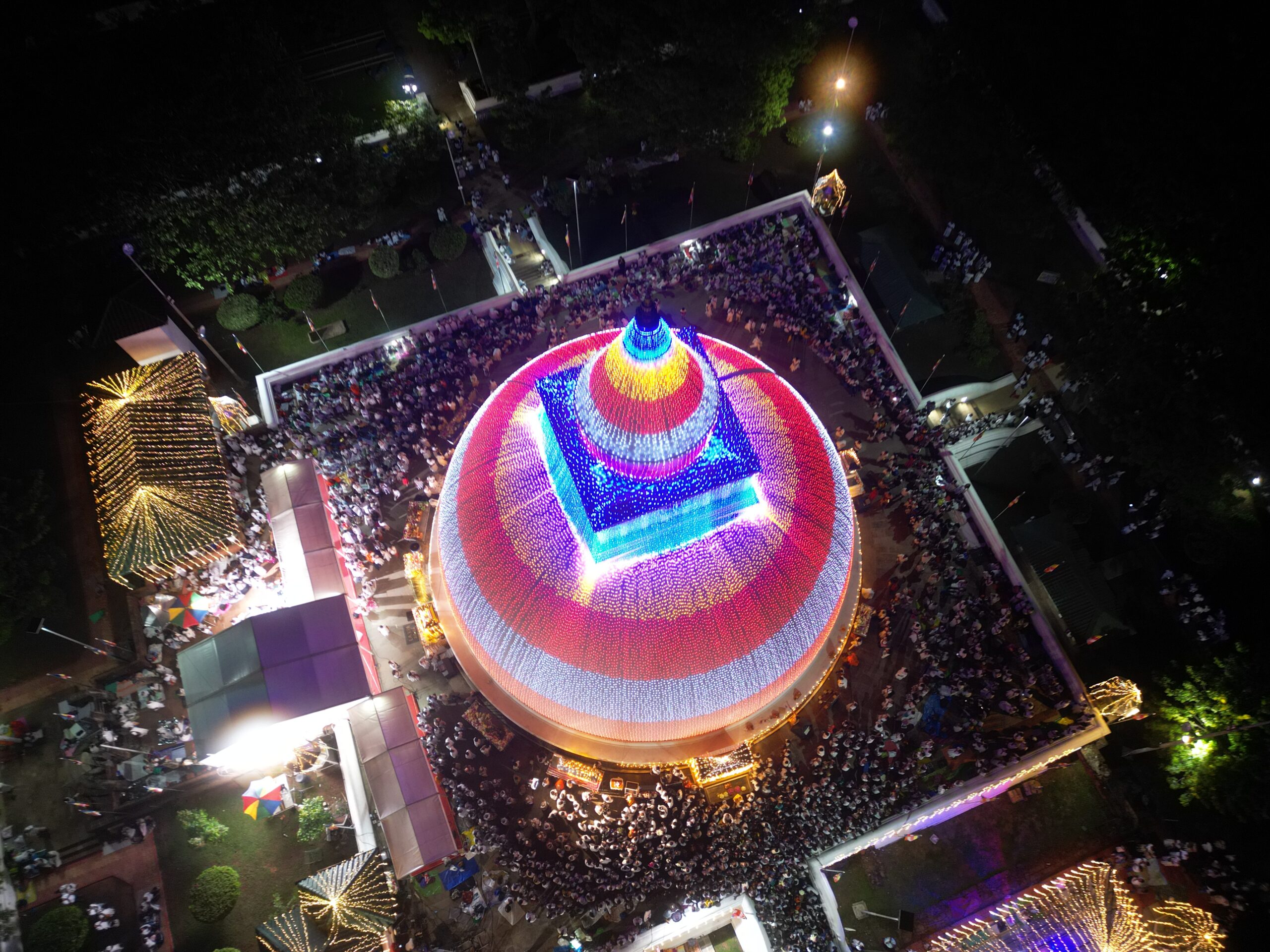
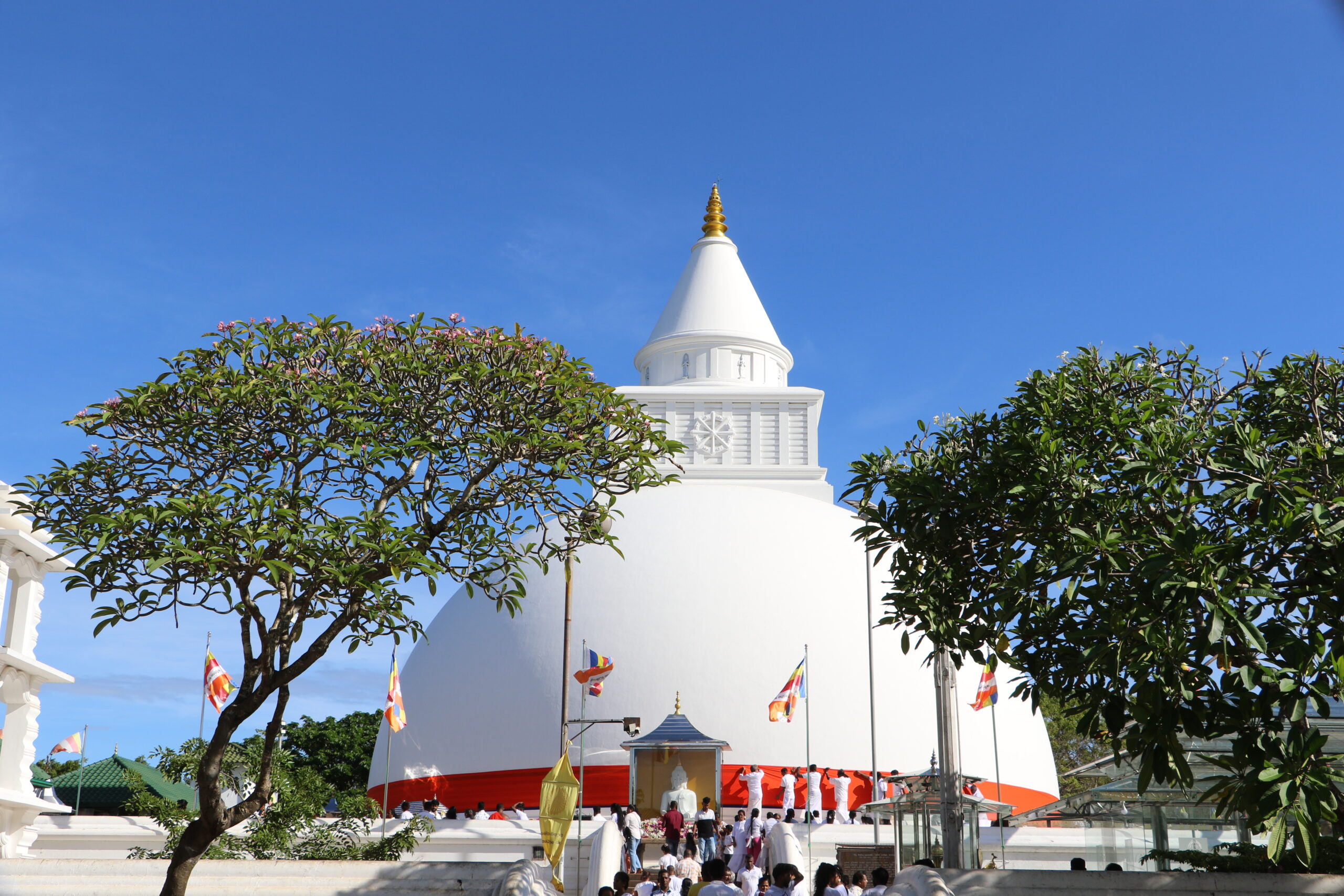
There is archaeological evidence that the Kirivehera Stupa, as seen today, has undergone renovations on approximately six occasions. Originally a small stupa, it has now evolved into a large monumental structure. The most recent renovation took place between 1959 and 1970 AD. Following this renovation, the stupa stands at a total height of 99 feet 6 inches, with a circumference of 277 feet. It features three square courtyards and four entrance gates.
There are several features that demonstrate the uniqueness of the Kirivehera Chaitya Raja.
I. The Kirivehera Chaitya is the only stupa that enshrines both the physical and consumable relics of the Buddha. It contains the sacred hair relics, which belong to the category of physical relics, as well as the royal golden casket used for the hair-shaving of Prince Siddhartha and the “Mahagi Asana” situated within the sacred Kihiri Garden, which are regarded as consumable relics. These sacred relics are enshrined within this stupa, making the Kirivehera Chaitya truly unique.
II. A distinctive feature of the ancient stupa tradition in Ruhuna is the construction of a side of basal rings, modeled after the Sanchi Stupa in India. This unique architectural element remains clearly visible in the Kirivehera.
III. The Kirivehera is also unique as the only stupa in the world where the three Pradakshina paths are arranged gradually, rising from the ground level in the traditional sequence.
There is archaeological evidence that the Kirivehera Stupa, as seen today, has undergone renovations on approximately six occasions. Originally a small stupa, it has now evolved into a large monumental structure. The most recent renovation took place between 1959 and 1970 AD. Following this renovation, the stupa stands at a total height of 99 feet 6 inches, with a circumference of 277 feet. It features three square courtyards and four entrance gates.