About Us

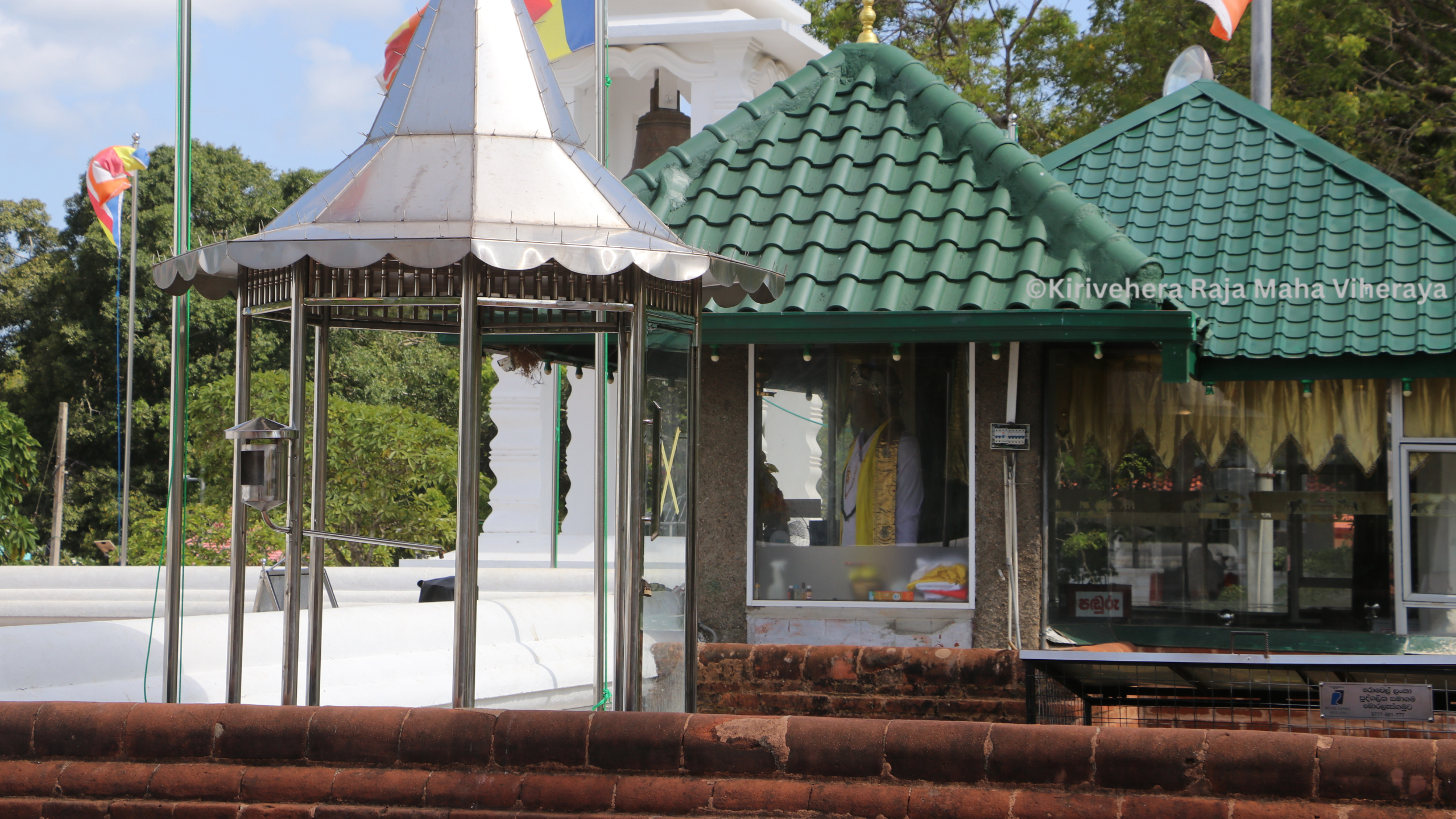
Kiri Viharaya, an ancient religious component of the Kirivehera Rajamaha Viharaya complex, is located to the left of the Kataragama Maha Devalaya. It is a Buddha statue temple. Although the construction does not date back to the time of King Dutugemunu, it is believed to be at least 1000 years old. By order of King Dutugemunu, all Buddhist rituals of the Kataragama Maha Devalaya have been entrusted to the Kirivehera Viharaya.

              The distance between the Maha Devalaya and the Kirivehera Rajamaha Viharaya must have been a problem in the past when it came to performing the daily rituals of the Maha Devalaya. 

Kiri Viharaya, an ancient religious component of the Kiri Vehera Rajamaha Viharaya complex, is located to the left of the Kataragama Maha Devalaya. It is a Buddha statue temple. Although the construction does not date back to the time of Dutugemunu, it is believed to be at least 1000 years old. By order of King Dutugemunu, all Buddhist rituals of the Kataragama Maha Devalaya have been entrusted to the Kiri Vehera Viharaya.

              The distance between the Maha Devalaya and the Kirivehera Rajamaha Viharaya must have been a problem in the past when it came to performing the daily rituals of the Maha Devalaya. The distance between the Maha Devalaya and the Kirivehera Rajamaha Viharaya must have been a problem in the past when it came to performing the daily rituals of the Maha Devalaya.

A statue house called Kiri Viharaya was built next to the Maha Devalaya as a solution. It is not a permanent monk’s residence. The Kiri Viharaya is used only for performing Buddhist rituals of the Maha Devalaya. In ancient times, Buddhist monasteries and temples existed as a common property of the Maha Sangha, which spread from the four directions. Under that situation, there was no position or person called the Viharadhipati.

The temples and Pirivena institutions where monks lived in large numbers were governed by the Sangha lineage. The heads of such institutions are referred to by the term “Naka Balana Thero” in ancient stone inscriptions.

Although there is historical information that with the construction of the Kirivehera Chaitya Raja Thero, a monastery for resident monks called the Raja Maha Viharaya was also created in connection with it, we do not have detailed information about it. There was no need to keep such information in writing at that time.

A legal status regarding the position of the chief priest was created with the British rule in this country. Accordingly, since the time of the Kandy Kingdom, information about the lineage and sects of the monks and nuns who ruled over the ancient Buddhist temples and monasteries in Sri Lanka has been documented. 

          Accordingly, the lineage of the Sangha related to the Kirivehera Rajamaha Viharaya begins with the helpless Sarana Weliwita Saranankara Sangharaja Mahimiya and his lineage of disciples who lived during the Kandy Kingdom. Wehella Dhammadinna was a chief disciple of Sangharaja Mahimiyan. Under the Sangharaja Mahimiyan’s Shasana Revival Movement, Wehella Dhammadinna Mahimiyan became the head of the Kataragama Kirivehera by a royal decree of King Sri Weera Parakrama Narendrasinghe.

That was in the year 1728 AD. Since then, the lineage of students of Wehella Dhammadinna Mahimiyan has held the position of the head of the Kirivehera.

Affiliate temples under the jurisdiction of the Kirivehera Rajamaha Viharaya

I. Siri Bodhichetthiyaramaya, Keselwatte, Panadura.

II. Walane Buddhist Monastery, Panadura.

III. Asiri Bo Sevana Viharaya, Kataragama.

IV. Kiri Viharaya, Kataragama.

The lineage of the Therapuththabhaya Maha Thero

The disciple lineage of the elder Nandamaha

The lineage of disciples and their successors led by Abhaya

The disciple lineage of Navarathna BuddharakkhitaThero of Veherella, including the Dhamma-Deena Sri Pada and the leadership of the Pahatharata tradition

Venerable Swarnajothi of Kaduru Pokune

Venerable Chandrajothi of Aluthdeniya

Venerable gunathna of Baddegama

Venerable Medhankara of Kirineliya

Venerable Piyarathana of Polommaruwa

Venerable Medhankara of Aluthwewa

Venerable Ananda of Paratte

Venerable Soratha of Aluthwewa

Venerable Dhamminda of Kobawaka (Current Chief Incumbent)